

Study Abroad navigation icon
Study Abroad
Study in India navigation icon
Study in India
Counselling navigation icon
Counselling
Certifications navigation icon
Certifications
Exams navigation icon
Exams

Hi I ammimi .AI !!

Home/Blogs/Ireland for Indian Students: Common Questions,...
Study Abroad

Ireland for Indian Students: Common Questions, Answered

The real costs, visa rules, work rights, and study options in Ireland for Indian students, answered plainly so you can judge whether the budget and housing situation fit you.

19 October 2026•9 min read
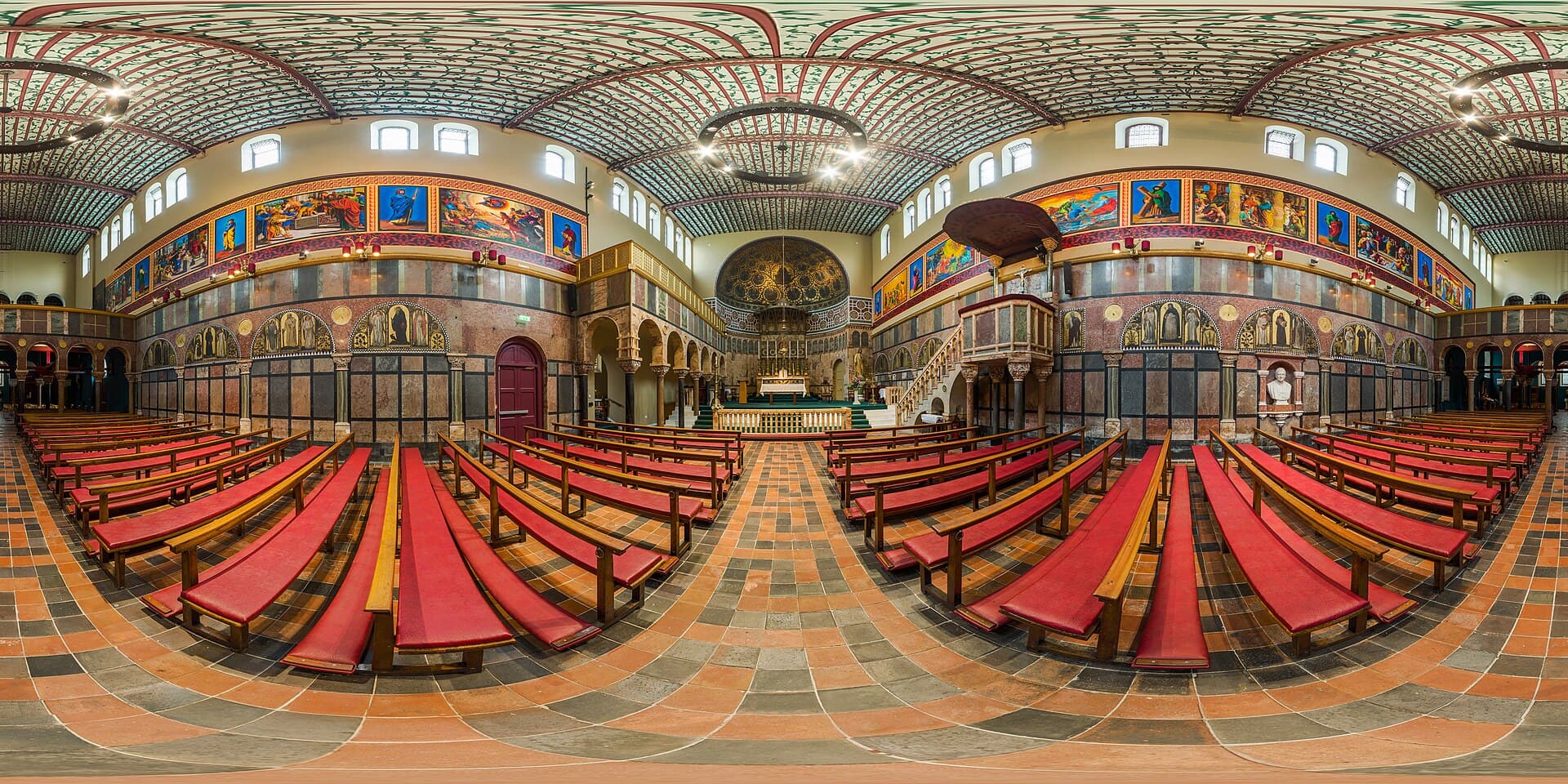
Ireland for Indian Students: Common Questions, Answered — image 1 of 1

No spam. Unsubscribe whenever you like.

In this article

  1. 1The biggest mistake is underestimating the upfront cash
  2. 2What will this actually cost you, all in?
  3. 3Which courses and fee bands matter for your budget?
  4. 4Can you work while studying, and does it actually help?
  5. 5How hard is the visa, and why do people get stuck?
  6. 6What academic profile do you need?
  7. 7Which universities make sense for Indian students?
  8. 8What happens after you graduate?
  9. 9What to do next
  10. 10Frequently asked questions

In this article

  1. 1The biggest mistake is underestimating the upfront cash
  2. 2What will this actually cost you, all in?
  3. 3Which courses and fee bands matter for your budget?
  4. 4Can you work while studying, and does it actually help?
  5. 5How hard is the visa, and why do people get stuck?
  6. 6What academic profile do you need?
  7. 7Which universities make sense for Indian students?

Still not sure which country fits you?

Half an hour with a counsellor beats a week of reading. They will look at your marks, your budget and your timeline, and tell you what is realistic.

  • 8What happens after you graduate?
  • 9What to do next
  • 10Frequently asked questions
  • 01

    The biggest mistake is underestimating the upfront cash

    Ireland can be a good fit if you can handle a large upfront payment and you are ready to sort housing early. The step many Indian students miss is this: tuition usually has to be paid in full before you apply for the visa, and you must also show money for living costs for the first year. That makes Ireland front-loaded in a way many other destinations are not.

    For tuition, the broad range is ₹9.6L – ₹24L (€10,000 – €25,000) per year. Living costs are another ₹12L – ₹17L (€12,000 – €18,000) per year, and Dublin is the expensive part. The practical issue is not only money. In Dublin, accommodation is genuinely hard to find, so you should secure it before you fly.

    If you want the fuller country-level breakdown, start with our Ireland guide, then use this article to answer the questions families ask most often.

    This country does not suit you if your budget is tight and you need a low-deposit, low-risk application process. It also does not suit you if you plan to arrive first and figure out housing later.


    02

    What will this actually cost you, all in?

    The first-year bill is usually more than just tuition and rent. You should plan for tuition, living costs, visa fee, IRP registration on arrival, and private medical insurance.

    Cost itemWhat to expectWhat it means for you
    Tuition / year₹9.6L – ₹24L (€10,000 – €25,000)Paid before the visa application in most cases
    Living / year₹12L – ₹17L (€12,000 – €18,000)Dublin is the expensive part
    Long stay 'D' study visa₹6,000 single entry / ₹10,000 multi (€60 single entry / €100 multi)One-off visa fee
    IRP registration on arrival₹29,000 (€300)Residence permit after you land
    Private medical insurance₹48,000 – ₹86,000 / year (€500 – €900 / year)Compulsory

    The official cost summary says you must show ₹9.6L available for living costs for the first year, on top of paid tuition. The same rule is listed as €10,000 available for living costs for the first year, on top of paid tuition. Treat that as the minimum proof level, not your full budget.

    For many families, the surprise is not the annual total. It is the timing. You need the money ready earlier than you would in a destination where a small deposit is enough to begin the visa process.

    Want this applied to your marks?

    A counsellor will take your scores, your budget and your timeline, and tell you which of these paths is actually open to you.

    03

    Which courses and fee bands matter for your budget?

    Your subject choice changes the price sharply. If you are comparing offers, look at the band for your course type, not the overall country average.

    Course typeTuition band
    Master's — business and humanities₹9.6L – ₹17L / year (€10,000 – €18,000 / year)
    Master's — computing, engineering, science₹14L – ₹25L / year (€15,000 – €26,000 / year)
    Bachelor's₹9.6L – ₹24L / year (€10,000 – €25,000 / year)
    Medicine₹43L – ₹53L / year (€45,000 – €55,000 / year)

    That is why Ireland works much better for some programmes than others. A business or humanities master's is usually easier to plan for than a medicine degree. If your dream is medicine, be ready for a much higher tuition commitment than the headline average suggests.

    Indian students most often pick MSc Computer Science, MSc Data Analytics, MSc Pharmaceutical Science, MSc International Business, MSc Financial Technology, MSc Cloud Computing, Computer Science & IT, Business & Finance, Engineering, Science & Technology, Life Sciences & Healthcare, and Arts and Humanities. Those choices line up with the strongest fee and career patterns in the country.

    If you are comparing universities, the safer approach is to shortlist by course first and city second, because the same subject can land you in a very different budget zone depending on where you live.

    04

    Can you work while studying, and does it actually help?

    Yes, but do not assume student work will pay for everything. The standard work rule is 20 hours per week during term and 40 hours per week during June–September and 15 December–15 January. The minimum wage is €14.15 an hour from January 2026.

    That makes work useful for part of your monthly spending, especially outside Dublin. It does not erase the main cost of the degree, and it should not be treated as your plan for tuition. Use it as support money, not as the core funding source.

    The timing matters too. If you are counting on work income, you still need enough cash to arrive safely, cover housing, and survive before you settle into a routine. In Dublin, that is even more important because the housing shortage is the single most common problem Indian students report there.

    So the honest answer is: yes, you can work, and yes, it helps. But it helps most when you already have your first-year budget in place.

    05

    How hard is the visa, and why do people get stuck?

    The visa route for longer study is the Long Stay 'D' Study Visa. The fee is ₹6,000 for single entry or ₹10,000 for multiple entry (€60 single entry or €100 multi). Processing time is 4 to 8 weeks, so you should not leave it to the last minute.

    The usual process is simple, but the order matters. You research and apply direct to the institution, accept the offer and pay the tuition, arrange accommodation, prepare travel documents and visa papers, apply online through AVATS, submit documents to VFS in India, and then register for an IRP if your stay is longer than 90 days.

    The visa usually wants proof of living funds of ₹9.6L for the first year, or €10,000 for the first year, plus evidence that tuition is paid. It also requires private medical insurance and an acceptance letter. The key point is that the financial trail has to make sense. A sponsor is allowed, but the paperwork needs to be clear.

    People get refused or delayed when the documents do not match the money, the tuition has not been paid as required, or the housing plan is weak. The easiest way to avoid trouble is to keep every payment and bank paper clean and consistent.

    06

    What academic profile do you need?

    For master's entry, a 3-year Indian bachelor's is accepted. That is a major advantage if you are worried that your undergraduate degree length will block you.

    For most programmes, 60%+ is the broad benchmark, which the guide maps to a 2:2. For Trinity and UCD, the typical range is 65–70%. That means you do not need a perfect profile to be realistic, but your target university still matters.

    For English, the listed requirements are IELTS Academic 6.5 overall with 6.0 in each band, PTE Academic 63, TOEFL iBT 90, and Duolingo 110 – 120. Duolingo is accepted at many but not all institutions, so do not assume it works everywhere.

    The best use of these numbers is simple: check whether your current profile fits the band before you spend time and money on applications. If you are below the usual range for your target university, move one step down the selectivity ladder rather than forcing a weak application.

    07

    Which universities make sense for Indian students?

    Do not choose Ireland by university name alone. Choose by course fit, city, and whether the school is known for the kind of student outcome you want.

    • Trinity College Dublin — Dublin
    • University College Dublin — Dublin
    • University of Galway — Galway, medical devices and biotech
    • University College Cork — Cork, pharma corridor
    • Dublin City University — Dublin, strong industry placement culture
    • University of Limerick — Limerick
    • Maynooth University — Maynooth
    • Technological University Dublin — Dublin
    • Royal College of Surgeons in Ireland — Dublin, medicine

    There are also options such as Atlantic Technological University, Technological University of the Shannon, Dundalk Institute of Technology, Institute of Art, Design & Technology, National College of Art and Design, Shannon College of Hotel Management, American College Dublin, Dublin Business School, Griffith College Dublin, and CCT College Dublin.

    If you want a practical shortlist, use course strength first, then city affordability. Dublin offers the biggest concentration of options, but it is also the hardest place for housing. Cork, Galway, and Limerick can be easier on day-to-day living.

    08

    What happens after you graduate?

    After study, Ireland gives you a clear route to stay and work. The post-study route is the Third Level Graduate Programme, also known as Stamp 1G. It gives you full work rights with any employer while you look for a graduate role, and you apply from inside Ireland after results are issued.

    The duration is 2 years after a master's and 1 year after a bachelor's. That is one of the main reasons students choose Ireland: you get real time to job-hunt without needing a sponsor immediately.

    If you later move into a Critical Skills Employment Permit, that can lead to Stamp 4 after two years and long-term residence after five. The critical-skills list covers most IT, engineering and healthcare roles. That does not guarantee a job, but it does show why these fields are such a strong match for Ireland.

    Put simply, Ireland is a better fit if your goal is to study and then look for work in a structured way. It is a weaker fit if you need immediate low-cost study and do not plan to stay after graduation.

    09

    What to do next

    First, check whether you can handle the upfront cost: paid tuition, first-year living funds, visa fee, insurance, and IRP registration. Then decide whether your course and city choice fit your budget, especially if Dublin is in the mix. If the numbers work, shortlist universities, confirm housing early, and apply by the intake window that matches your course.

    10

    Frequently asked questions

    Is a 3-year Indian degree accepted for a master's in Ireland?

    Yes. A 3-year Indian bachelor's is accepted for master's entry at Irish universities.

    Do I usually have to pay the full tuition before the visa application?

    Yes. Ireland generally requires tuition to be paid in full before you apply for the visa.

    How much money do I need to show for the visa?

    You must show ₹9.6L for living costs for the first year, or €10,000 for living costs for the first year, plus evidence that tuition is paid.

    Can I work while studying in Ireland?

    Yes. You can work 20 hours per week during term and 40 hours per week during June–September and 15 December–15 January.

    How long can I stay and work after graduation?

    You can stay for 2 years after a master's and 1 year after a bachelor's under the Third Level Graduate Programme.

    Is Dublin a bad choice for Indian students?

    Dublin is not a bad choice, but it is the hardest place for housing, so you should secure accommodation before you fly.

    Featured blogs

    View all posts

    Confused After Class 12? A Counsellor's Simple Framework to Choose the Right Course

    Make My Education • 01 Jul 2026

    Almost nobody has it figured out at seventeen — and you do not need to. A four-step framework that turns “what should I do with…

    • Career Guidance
    • Class 12
    Read more

    NEET Counselling Demystified: All India Quota vs State Quota Explained Simply

    Make My Education • 01 Jul 2026

    The counselling after NEET confuses more students than the exam did. All India Quota versus State Quota, how a round actually…

    • Medical
    • NEET
    Read more

    Got Your JEE Rank? Here's How to Actually Choose the Right Engineering College

    Make My Education • 26 Jun 2026

    “Which is the best college I can get?” is the right question asked the wrong way. Branch versus brand, how to read a placement…

    • Engineering
    • JEE
    Read more