

Study Abroad navigation icon
Study Abroad
Study in India navigation icon
Study in India
Counselling navigation icon
Counselling
Certifications navigation icon
Certifications
Exams navigation icon
Exams

Hi I ammimi .AI !!

Home/Blogs/Best Colleges in Jammu & Kashmir: Where...
Study In India

Best Colleges in Jammu & Kashmir: Where Students Get In

A realistic shortlist of Jammu & Kashmir colleges that students actually target, plus the exams, fees, hostel costs, and scholarships you need to compare before applying.

14 November 2026•9 min read
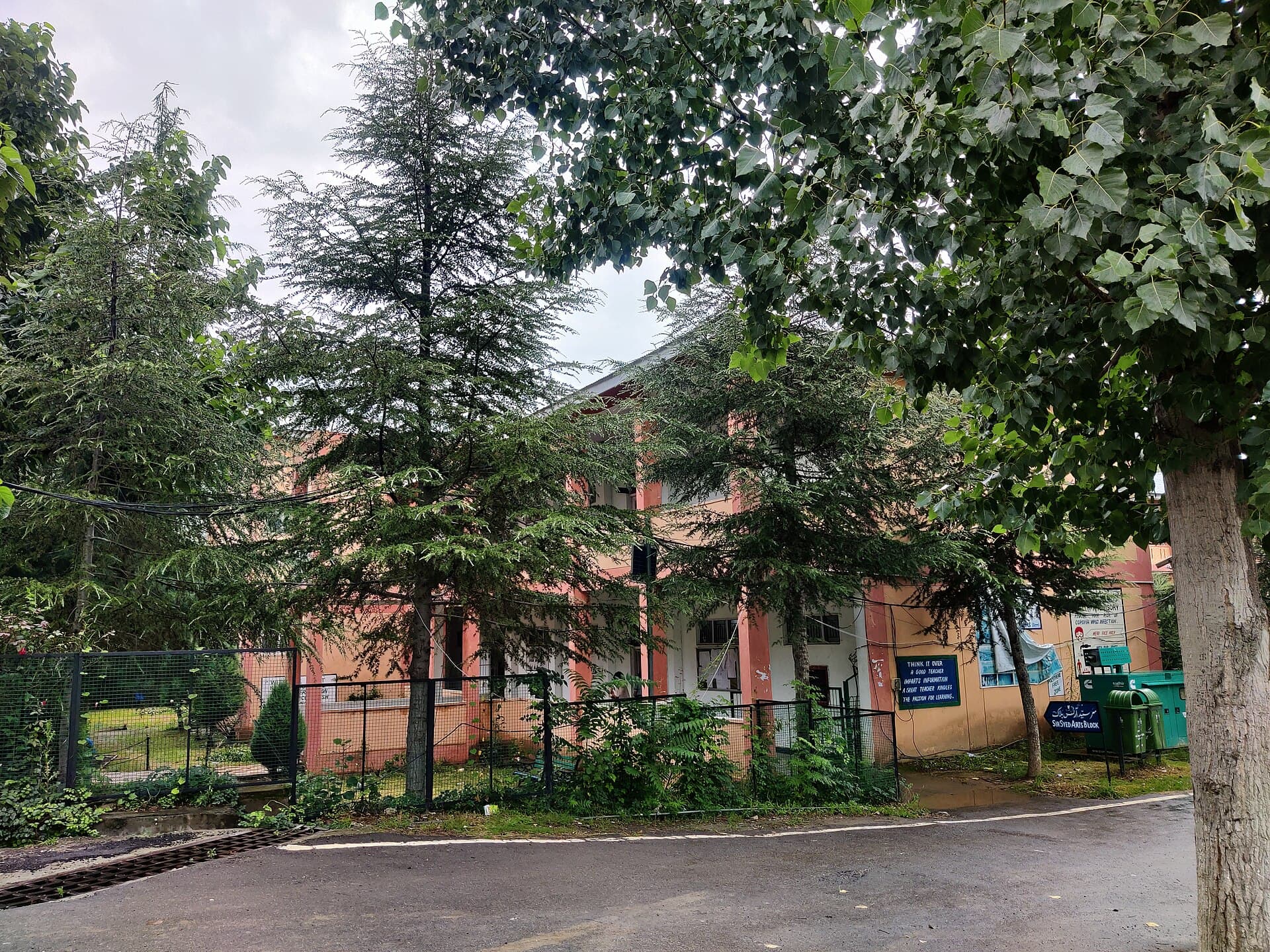
Best Colleges in Jammu & Kashmir: Where Students Get In — image 1 of 1

No spam. Unsubscribe whenever you like.

In this article

  1. 1The shortest answer: start with NIT Srinagar, then check the central universities
  2. 2What the guide actually lists as the main colleges
  3. 3Which exam you actually need for each route
  4. 4Fees: government seats are the cheaper route, but hostel costs still matter
  5. 5Is a government seat worth it here?
  6. 6Scholarships and who should look at them first
  7. 7What courses students actually compare in this state
  8. 8What kind of job outcome to expect
  9. 9What to do next
  10. 10Frequently asked questions

In this article

  1. 1The shortest answer: start with NIT Srinagar, then check the central universities
  2. 2What the guide actually lists as the main colleges
  3. 3Which exam you actually need for each route
  4. 4Fees: government seats are the cheaper route, but hostel costs still matter
  5. 5Is a government seat worth it here?
  6. 6Scholarships and who should look at them first
  7. 7What courses students actually compare in this state

Still not sure which country fits you?

Half an hour with a counsellor beats a week of reading. They will look at your marks, your budget and your timeline, and tell you what is realistic.

  • 8What kind of job outcome to expect
  • 9What to do next
  • 10Frequently asked questions
  • 01

    The shortest answer: start with NIT Srinagar, then check the central universities

    If you want the most realistic shortlist in Jammu & Kashmir, start with NIT Srinagar, Central University of Kashmir, and Central University of Jammu. These are the flagship names recorded in the state guide, and they are the colleges most students compare first when they are trying to get a seat in the state.

    The important part is not just the name of the college. It is the entry route. For NIT Srinagar, the guide records JEE Main / Advanced: NTA / IITs. For the central universities, the guide records CUET (UG): NTA. If you are unsure which exam matches your course, check the college page and the state guide before you spend time preparing in the wrong direction. You can also keep the full state breakdown handy here: Jammu & Kashmir state guide.

    That makes Jammu & Kashmir different from states where students chase many unrelated entrance routes. Here, the path is comparatively clear. Engineering points you toward JEE. General degree and multi-disciplinary options point you toward CUET. That simple split is useful if you are planning after Class 12 and do not want to spread your preparation too thin.


    02

    What the guide actually lists as the main colleges

    The state guide does not try to list every college. It highlights the institutions students most often look at first. That is useful, because the real choice for most families is not between dozens of equally known names. It is between a few established institutions and everything else.

    • National Institute of Technology (NIT) Srinagar — Srinagar, Engineering
    • Central University of Kashmir — Srinagar, Multi-disciplinary
    • Central University of Jammu — Jammu, Multi-disciplinary

    If you are aiming for engineering, NIT Srinagar is the obvious first check. If you want a broader undergraduate option in arts, science, or related streams, the two central universities are the main names recorded in the guide. That does not mean other colleges are bad. It means these are the colleges the guide treats as the most relevant starting point for a serious comparison.

    The guide also notes the primary language as Hindi, English. For a student coming from another state, that matters because it affects how comfortably you can handle classes, documents, and day-to-day college life. It is not the only thing that matters, but it is one less obstacle if you are comparing options across states.

    Want this applied to your marks?

    A counsellor will take your scores, your budget and your timeline, and tell you which of these paths is actually open to you.

    03

    Which exam you actually need for each route

    Do not treat all entrance exams as interchangeable. In Jammu & Kashmir, the guide records two main exam routes you should keep separate.

    College / routeExam you needWho conducts it
    NIT SrinagarJEE Main / AdvancedNTA / IITs
    Central University of KashmirCUET (UG)NTA
    Central University of JammuCUET (UG)NTA

    The practical takeaway is simple. If you are aiming at NIT Srinagar, your preparation should be built around JEE. If you are aiming at the central universities, your preparation should be built around CUET. A student who prepares for the wrong exam for months can lose an entire admission cycle, even if the college itself would have been a good fit.

    The guide also records the academic requirement as Class 12 with the relevant subject combination for your chosen course. That means your board subjects matter. A student looking at engineering, for example, should not assume any Class 12 combination will work. Check the course rule first, then check the exam.

    04

    Fees: government seats are the cheaper route, but hostel costs still matter

    The biggest fee question is not whether Jammu & Kashmir is affordable in theory. It is how the total bill changes once you include tuition and hostel. The guide gives three useful fee ranges.

    Cost itemRecorded range
    Avg. Govt Fees₹0.2L – ₹2L/yr
    Tuition — Government college₹0.2L – ₹1L / yr
    Tuition — Private college₹0.8L – ₹2.5L / yr
    Hostel cost — College hostel + mess₹0.3L – ₹0.9L / yr

    This is where families should compare carefully. A government seat can keep tuition lower, but hostel and mess charges still add a real yearly cost. A private seat is clearly more expensive in the guide’s own ranges, so if you are comparing a government seat in Jammu & Kashmir with a private seat at home, you should compare the full annual outgo, not just the tuition line.

    The guide does not give a single all-in number for every college, so the safest way to judge affordability is to add the tuition range and the hostel range for the specific college you are considering. If you need the exact breakup for a particular institution, check that college’s official fee notice and the state guide together.

    05

    Is a government seat worth it here?

    For many students, yes — but only if the course and college match your goal. The guide’s strongest government-linked options are NIT Srinagar and the central universities. Those are the names that make the government-seat option meaningful in Jammu & Kashmir.

    The guide also says Jammu & Kashmir has established institutions in a smaller, less crowded system. It notes that a smaller applicant pool than the biggest states means less extreme competition for a genuinely established institution's seats. That does not mean admission is easy. It means the state can be a realistic target if you are preparing seriously and you are not only chasing the most crowded metros.

    This matters for families deciding whether to stay close to home or move for a seat. If your goal is a recognised public institution, Jammu & Kashmir gives you a short list that is easy to understand: one top engineering institute and two central universities. If your goal is a very specific branch or a very specific college environment, you still need to check the exact course and admission route before you decide.

    06

    Scholarships and who should look at them first

    The guide records one clear support option: Jammu & Kashmir government post-matric scholarships. It notes fee reimbursement for SC/ST/OBC and economically weaker students, through the Government of Jammu & Kashmir. If you are in one of those categories, you should check this early, because it can change the real cost of studying.

    This is especially important for students choosing between a government seat and a private seat. A scholarship does not remove every cost, but it can change whether a course is financially manageable. If you are depending on financial support, do not wait until after admission to check the rules. Verify the documents and eligibility before counselling or application deadlines start becoming urgent.

    The guide does not record any scholarship amount, so you should look up the reimbursement rules directly in the state scholarship process and the official college notice. That is the safest way to avoid assuming support that may not apply to your category or course.

    07

    What courses students actually compare in this state

    The guide highlights three course families that students commonly look at in Jammu & Kashmir: B.Tech (Computer Science/Civil), B.A./B.Sc., and Horticulture. That tells you something useful about the state’s academic profile. Engineering is a major draw, but so are general degrees and agriculture-linked study areas.

    If you are comparing options, the course you choose should drive the exam you prepare for. B.Tech points you toward JEE for NIT Srinagar. B.A. and B.Sc. typically push you toward CUET for the central universities. Horticulture may also be relevant if you are looking for a course that connects with the state’s wider economy and industry mix.

    The guide records the main industries as Tourism & handicrafts, Government, Horticulture. That does not mean every graduate goes into those areas. It does mean the state has a real local context, and course choice should be made with that in mind. If you want to stay and work nearby after graduation, that local economy matters as much as the college name.

    08

    What kind of job outcome to expect

    Do not expect the guide to give you a single neat salary promise. It does not. The career outlook is recorded as avg. package: Varies widely by college and branch. That is the honest answer, and it is the one you should use when comparing colleges.

    For a family, that means one thing: the college name alone is not enough. A government seat in a strong branch can be a different outcome from a private seat in a weak branch. The guide does not support blanket salary claims, so the right way to judge this state is to compare the college, the branch, and the exam route together.

    If you want a practical shortlist, use this order: first match the exam, then check the course, then compare total annual cost, and only then think about the career path. That approach keeps you from paying for a college that looks good on paper but does not fit your actual admission route or budget.

    09

    What to do next

    First decide whether your target is NIT Srinagar or a central university, because that changes the exam you need. Then compare total annual cost, including tuition and hostel, and check whether you qualify for the Jammu & Kashmir post-matric scholarship before you apply.

    10

    Frequently asked questions

    Which exam do I need for NIT Srinagar?

    You need JEE Main / Advanced, as recorded in the Jammu & Kashmir guide for NIT Srinagar.

    Which exam do I need for Central University of Kashmir and Central University of Jammu?

    You need CUET (UG), as recorded in the Jammu & Kashmir guide for both central universities.

    Are government colleges cheaper than private colleges in Jammu & Kashmir?

    Yes. The guide records tuition at ₹0.2L – ₹1L / yr for government colleges and ₹0.8L – ₹2.5L / yr for private colleges.

    How much should I budget for hostel and mess?

    The guide records hostel cost — College hostel + mess — at ₹0.3L – ₹0.9L / yr.

    Can I get fee help in Jammu & Kashmir?

    Yes. The guide records Jammu & Kashmir government post-matric scholarships with fee reimbursement for SC/ST/OBC and economically weaker students.

    What courses are the most common in the guide?

    The guide highlights B.Tech (Computer Science/Civil), B.A./B.Sc., and Horticulture.

    Featured blogs

    View all posts

    Confused After Class 12? A Counsellor's Simple Framework to Choose the Right Course

    Make My Education • 01 Jul 2026

    Almost nobody has it figured out at seventeen — and you do not need to. A four-step framework that turns “what should I do with…

    • Career Guidance
    • Class 12
    Read more

    NEET Counselling Demystified: All India Quota vs State Quota Explained Simply

    Make My Education • 01 Jul 2026

    The counselling after NEET confuses more students than the exam did. All India Quota versus State Quota, how a round actually…

    • Medical
    • NEET
    Read more

    Got Your JEE Rank? Here's How to Actually Choose the Right Engineering College

    Make My Education • 26 Jun 2026

    “Which is the best college I can get?” is the right question asked the wrong way. Branch versus brand, how to read a placement…

    • Engineering
    • JEE
    Read more